Home | News & Blog | EICR, EPC & Gas Safety Explained: The 2026 Landlord’s Obligations
As rental legislation continues to tighten, landlord compliance in 2026 is under greater scrutiny than ever before. Electrical safety, energy efficiency, and gas safety remain three of the most critical legal responsibilities for landlords, and failure to comply can result in heavy fines, enforcement action, or restrictions on letting a property.
In this blog post, we explain EICR, EPC and Gas Safety requirements, what’s changing in 2026, and how landlords can stay compliant while protecting both their tenants and their investment.
Why Compliance Matters More in 2026
Recent reforms to the private rented sector place a stronger emphasis on property standards, tenant safety, and documented evidence of compliance. With increased enforcement powers for local authorities and the introduction of new dispute resolution mechanisms, landlords must now demonstrate, not just claim that their properties meet legal standards.
Having valid, up-to-date certificates is no longer optional. It is fundamental to lawful letting.
Electrical Safety: EICR Explained
What Is an EICR?
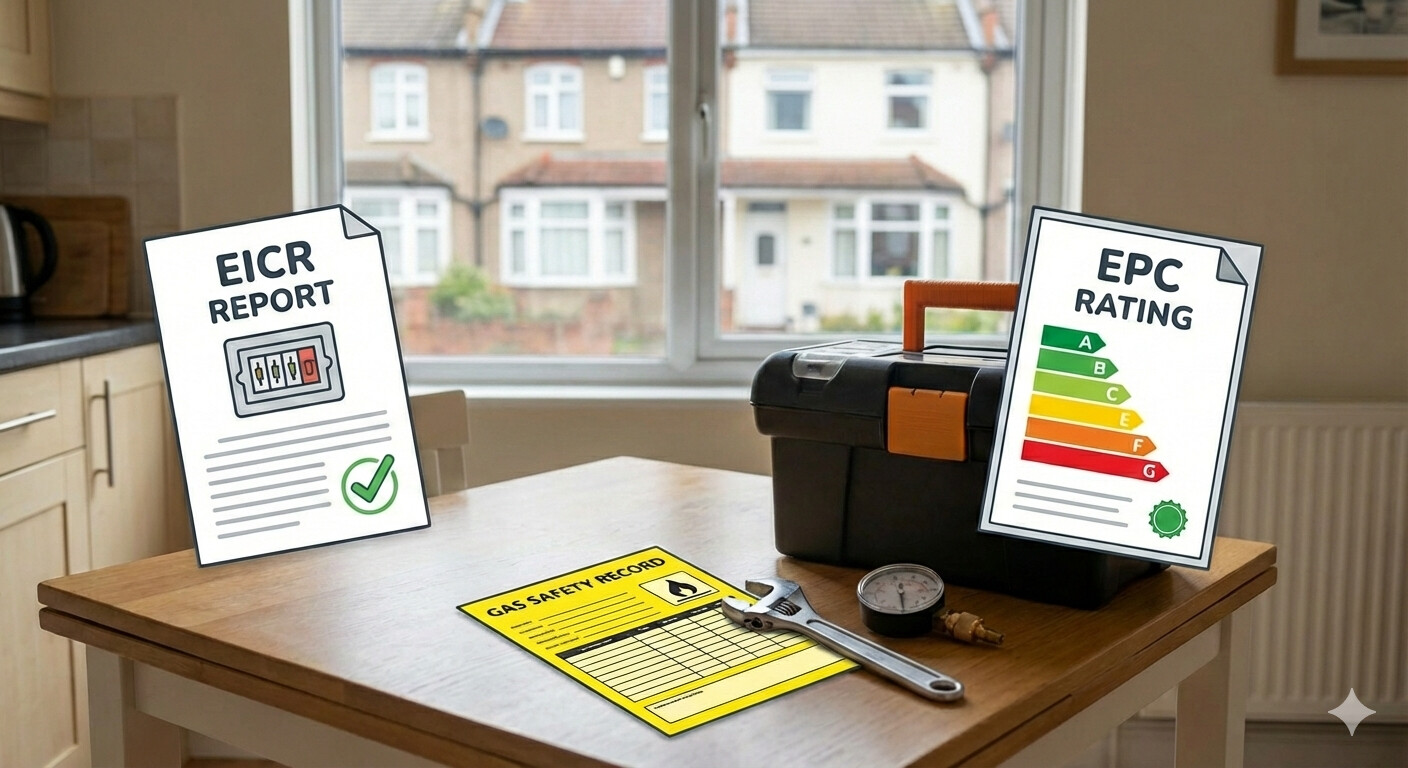
An Electrical Installation Condition Report (EICR) assesses the safety of fixed electrical installations within a rental property. This includes wiring, sockets, consumer units, and permanently connected equipment.
2026 Landlord Obligations
- An EICR must be carried out at least every 5 years
- Inspections must be completed by a qualified and competent electrician
- Any C1 or C2 hazards must be remedied within 28 days (or sooner if specified)
- Copies of the report must be:
- Provided to tenants
- Supplied to the local authority upon request
- Retained as evidence of compliance
Failure to comply can result in fines of up to £30,000 per property.
Energy Performance Certificates (EPC)
What Is an EPC?
An Energy Performance Certificate (EPC) measures the energy efficiency of a property, rating it from A (most efficient) to G (least efficient).
What’s Changing for 2026?
Minimum energy efficiency standards continue to tighten. While requirements have evolved, landlords should expect:
- Minimum EPC rating of C for most new and existing tenancies (subject to final government confirmation)
- Greater enforcement against non-compliant properties
- Increased focus on insulation, heating efficiency, and carbon reduction
An EPC is valid for 10 years, but landlords should reassess sooner if improvements are made.
Improving energy efficiency can reduce tenant bills, increase property value, and improve letting appeal.
Gas Safety Certificates
What Is a Gas Safety Check?
Landlords must ensure that all gas appliances, fittings, and flues are safe to use. This is confirmed through an annual Gas Safety Certificate (CP12).
Legal Requirements
- Gas safety checks must be carried out every 12 months
- Inspections must be completed by a Gas Safe registered engineer
- Certificates must be:
- Provided to tenants within 28 days
- Given to new tenants before they move in
- Kept on record for at least two years
Gas safety remains one of the most strictly enforced areas of landlord compliance, with severe penalties for breaches.
The Importance of Inspections & Documentation
In 2026, it’s not enough to simply hold certificates — landlords must also be able to demonstrate proactive property management.
Regular inspections help to:
- Identify hazards early
- Ensure ongoing compliance between certificate renewals
- Provide documented evidence in the event of disputes or enforcement action
Professional inspection reports, supported by photographs and clear records, are increasingly relied upon by councils, adjudicators, and ombudsmen.
Common Landlord Mistakes to Avoid
- Letting a property with expired certificates
- Assuming compliance transfers automatically after a change of tenant
- Failing to provide documents to tenants on time
- Not retaining evidence of remedial work
- Relying on informal or unqualified inspections
Each of these mistakes can result in fines, delays in possession proceedings, or reputational damage.
How Ashworth Group Supports Landlords
Ashworth Group works with landlords and letting agents across London and Essex to ensure properties meet evolving compliance standards.
Our services include:
- Independent property inspections
- Inventory reports with photographic evidence
- Mid-tenancy and check-out inspections
- Support in maintaining accurate compliance records
We help landlords stay organised, protected, and prepared — especially as enforcement and expectations increase in 2026.
Preparing for 2026: A Simple Checklist
- Check EICR expiry dates and book renewals early
- Review EPC ratings and plan energy efficiency upgrades
- Schedule annual Gas Safety inspections in advance
- Maintain organised digital records
- Carry out regular property inspections
Final Thoughts
Compliance is no longer a box-ticking exercise —it’s a cornerstone of successful property management. Understanding your EICR, EPC and Gas Safety obligations in 2026 will help you avoid penalties, protect tenants, and future-proof your rental portfolio.
If you’re unsure whether your property meets current requirements, professional support from a reputable inventory company can make all the difference. Contact Ashworth Group today if you need more information.