Home | News & Blog | The Renters’ Rights Act Explained: A Detailed 2026 Guide for Landlords
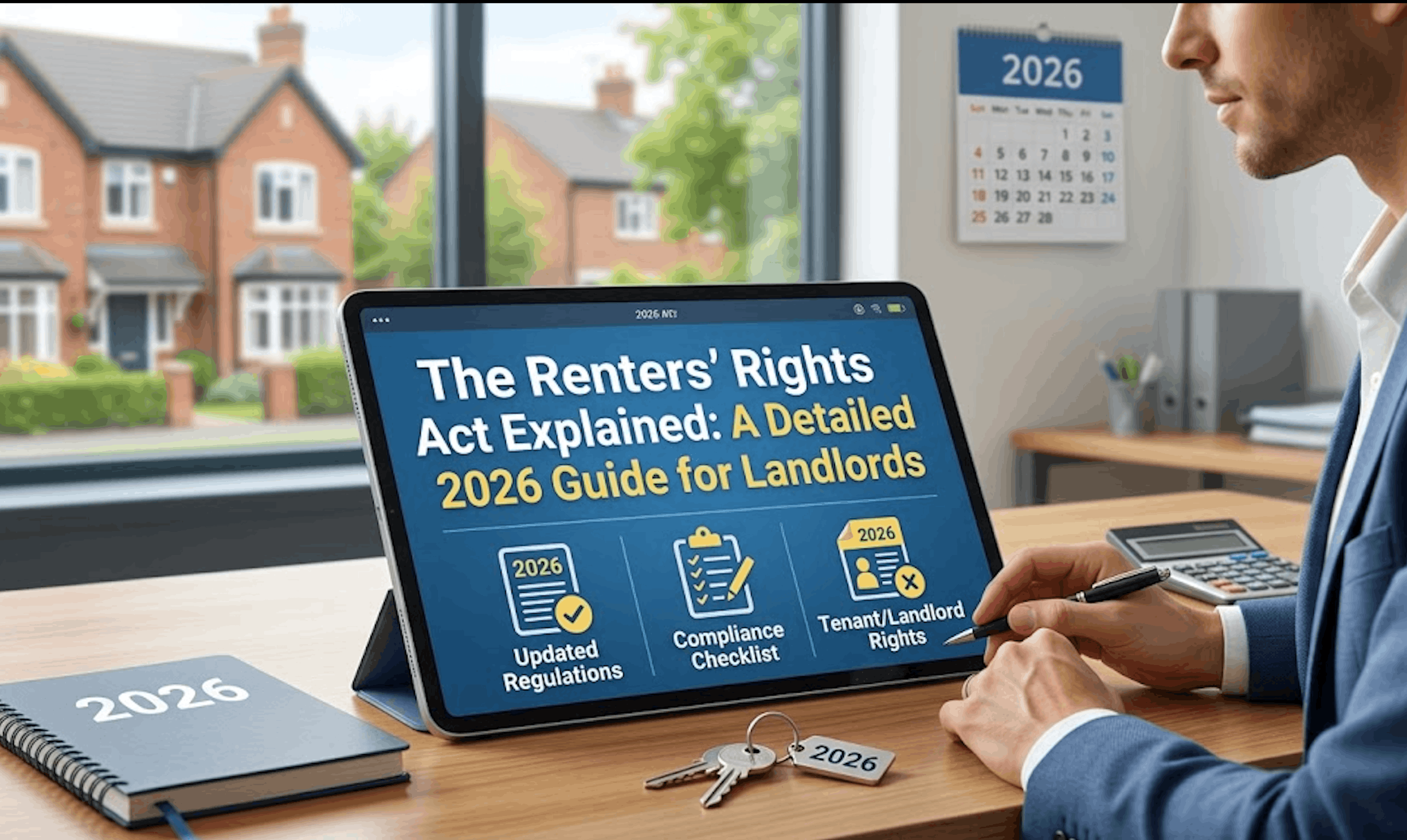
The Renters’ Rights Act Explained: A Detailed 2026 Guide for Landlords
The Renters’ Rights Act 2025 comes into force on 1st May 2026, and represents one of the most fundamental changes to the private rental sector in England in decades.
It reshapes how tenancies are structured, how rent is increased, and how landlords can regain possession of their property, while placing a much stronger emphasis on tenant rights, property standards, and documented evidence.
This blog post provides a comprehensive breakdown of the Act, key dates, and what landlords must do now to remain compliant.
Understanding the timeline is essential:
- 1st May 2026 - The Renters’ Rights Act 2025 comes into force.
- 31st May 2026 - Deadline for landlords to provide written tenancy information if none exists.
- 1st May – 30th July 2026 - Window for certain student tenancy possession notices.
Note: If a landlord serves a Section 21 or Section 8 notice before 1st May 2026, the previous rules may still apply for that tenancy.
What the Renters’ Rights Act Actually Changes
The Act is not just an update - it is a structural shift in how renting works.
Key Objectives:
- End unfair eviction practices.
- Improve housing standards.
- Increase tenant security.
- Create a more transparent rental system.
End of Fixed-Term Tenancies
From 1st May 2026, fixed-term tenancies will effectively be abolished.
- All tenancies automatically become periodic (rolling) tenancies.
- There is no fixed end date.
- Tenancies continue until:
- The Tenant gives notice.
- The Landlord has a valid legal ground to end the tenancy.
- Both parties agree to end the tenancy.
What This Means for Landlords
- You lose the ability to rely on tenancy end dates.
- Tenant retention becomes more importan.t
- Documentation and legal grounds become critical.
Abolition of Section 21 Evictions
From 1st May 2026, Section 21 “no-fault” evictions are abolished.
- Landlords cannot evict without a reason.
- All possession must be via Section 8 grounds.
- Courts will require evidence-based justification.
Valid Grounds for Evictions Include:
- Rent arrears.
- Anti-social behaviour.
- Property damage.
- Landlord selling or moving in (with restrictions.)
NOTE: Some grounds cannot be used within the first 12 months of a tenancy (e.g. selling or moving in).
Changes to Rent Increases
The Act introduces stricter control over rent increases:
- Rent can only be increased once per year.
- Landlords must use Section 13 procedure.
- At least 2 months’ written notice is required.
- Rent must reflect fair market value.
Tenants can challenge increases at a tribunal if they believe they are excessive.
Rent review clauses in tenancy agreements will no longer apply after 1st May 2026.
Tenants’ Right to Request Pets
From 1st May 2026:
- Tenants can request to keep pets.
- Landlords cannot unreasonably refuse.
- Refusals must be:
- In writing.
- Justified.
- Tenants can challenge refusals legally
Special Rules for Student Lets
There are additional provisions for student tenancies:
- Landlords can use Ground 4A to regain possession.
- Requires 4 months’ notice.
- Must fall between 1st June and 30th September
Important:
- Notice must be issued by 31st May 2026 in most cases.
- For 2025/26 academic year, notices can be served between 1st May and 30th July 2026.
New Documentation Requirements
If no written tenancy agreement exists:
- Landlords must provide written tenancy terms by 31st May 2026.
The Act also reinforces that:
- Legal rights apply automatically.
- Landlords cannot override them through contracts.
Why Evidence Now Matters More Than Ever
One of the most important shifts is toward evidence-based decision making.
Landlords must now be able to prove:
- Property condition.
- Maintenance actions.
- Tenant communication.
- Legal compliance.
This is critical for:
- Court proceedings.
- Ombudsman decisions.
- Dispute resolution.
The Growing Importance of Inspections
Under the new system, regular inspections are no longer optional best practice - they are essential risk management tools.
Professional inspections help landlords:
- Identify issues early (e.g. damp, damage, misuse).
- Maintain compliance throughout the tenancy.
- Provide documented evidence.
- Support possession claims if needed. .
Key Risks for Landlords Who Don’t Prepare
- Inability to regain possession.
- Failed eviction cases due to lack of evidence.
- Disputes lost due to poor documentation.
- Enforcement action from local authorities.
- Financial penalties.
Landlord Action Checklist for 2026
- Review tenancy agreements.
- Prepare for periodic tenancies.
- Understand Section 8 grounds.
- Implement structured inspection schedules.
- Maintain detailed documentation.
- Ensure property condition meets required standards.
How Ashworth Group Supports Landlords
Ashworth Group helps landlords adapt to the Renters’ Rights Act through:
Mid-Tenancy Inspections
- Identify issues such as damp, mould, and maintenance risks.
- Provide documented evidence of proactive management.
- Support compliance with property standards.
Inventory Reports
- Detailed, independent, photographic records.
- Essential for dispute resolution and deposit protection.
Check-Out Inspections
- Clear end-of-tenancy condition reporting.
- Supports claims and reduces disputes.
Book a Mid-Tenancy Inspection to ensure ongoing compliance.
Arrange an Inventory Report to protect against disputes.
Speak to our team about preparing for the 2026 changes
Final Thoughts
The Renters’ Rights Act 2025 marks a fundamental shift from reactive to proactive landlord management.
Success will depend on:
- Organisation.
- Evidence.
- Regular inspections.
- Professional standards.
Landlords who prepare early, by improving documentation, adopting regular inspections, and maintaining high standards, will not only remain compliant but will also benefit from more stable tenancies and reduced risk.
If you have any questions regarding the new framework, Contact Ashworth Group today.