Home | News & Blog | Damp and Mould in Rental Properties - Landlord Responsibilities
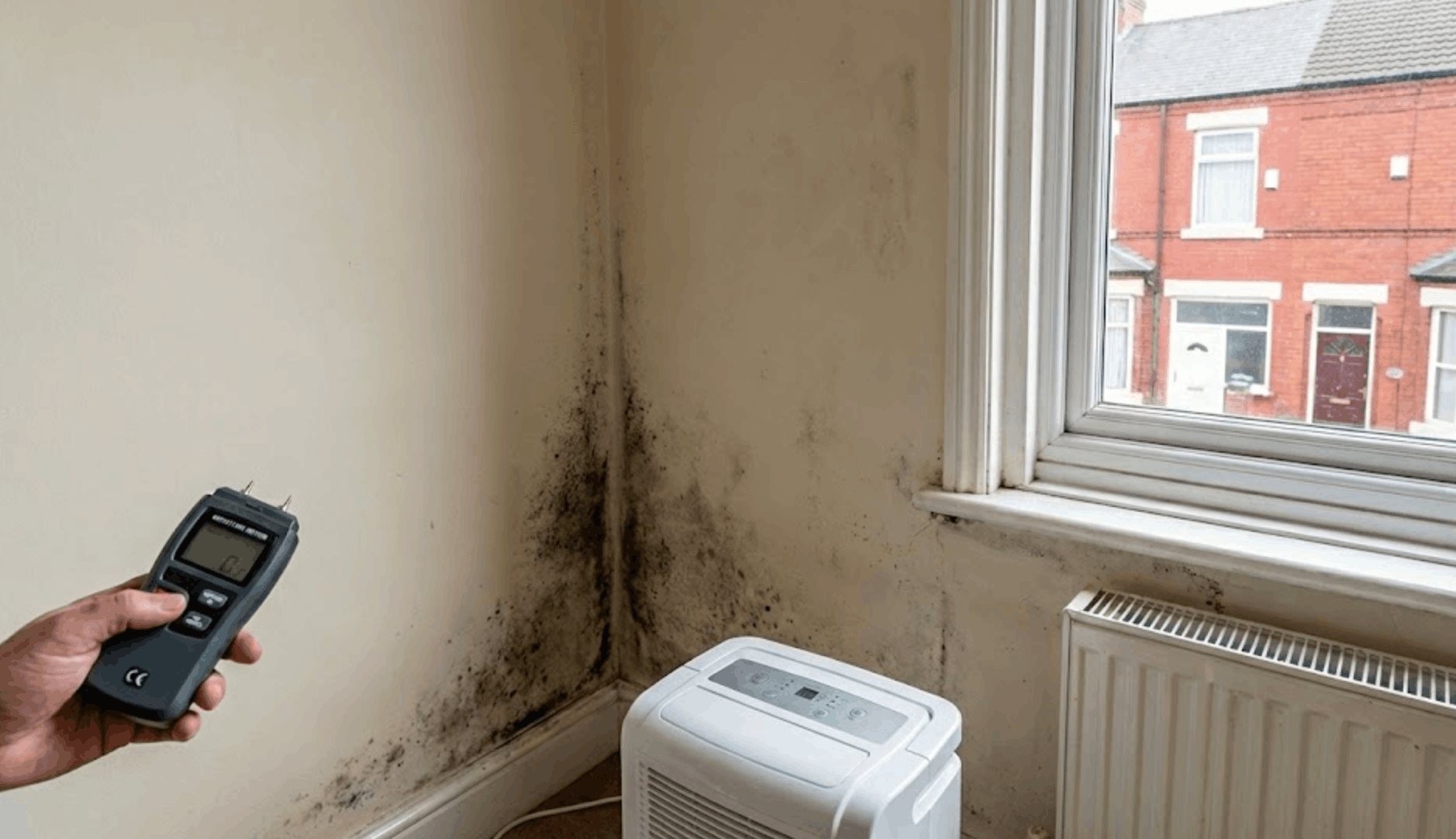
Damp and mould are no longer viewed as minor maintenance issues. In 2026, they sit firmly at the centre of landlord compliance, tenant safety, and local authority enforcement.
With new housing standards, increased council powers, and heightened awareness of tenant health, landlords are now expected to take a proactive, evidence-led approach to identifying and managing damp and mould in rental properties.
This blog post explains what’s changed, what landlords are responsible for, and how regular mid-term inspections can play a critical role in protecting both tenants and landlords.
Why Damp and Mould Are a Major Compliance Issue in 2026
Damp and mould are now explicitly recognised as serious hazards under housing standards. Local authorities are far more willing to intervene where properties show signs of persistent condensation, mould growth, or poor ventilation.
In 2026, enforcement action is often triggered by:
- Tenant complaints.
- Health concerns (Especially involving children or vulnerable occupants).
- Evidence of recurring damp issues.
- Lack of documented inspections or follow-up action.
Importantly, councils and ombudsmen no longer accept “We weren’t aware” as a defence if landlords cannot demonstrate regular monitoring and inspection.
What Are Landlords Legally Responsible For?
In simple terms, landlords must ensure that rental properties are fit for habitation throughout the tenancy, not just at check in .
This includes a responsibility to:
- Investigate reported damp or mould promptly.
- Identify and address the root cause, not just clean visible mould.
- Maintain heating, ventilation, insulation, and structural elements.
- Provide clear guidance to tenants where lifestyle factors contribute.
- Keep documented evidence of inspections, advice, and remedial works.
Failure to act, or failure to evidence action, can result in:
- Improvement notices.
- Civil penalties.
- Rent repayment orders.
- Restrictions on re-letting.
Common Causes of Damp and Mould in Rental Properties
Understanding cause is critical, as responsibility can vary depending on the issue.
Structural or Property-Related Causes
These are almost always the landlord’s responsibility:
- Faulty roofing or guttering.
- Rising damp.
- Penetrating damp through walls.
- Poor insulation.
- Defective windows or seals.
- Inadequate ventilation systems.
Condensation & Occupancy-Related Factors
These may involve shared responsibility:
- Lack of ventilation during cooking or bathing.
- Drying clothes indoors without ventilation.
- Insufficient heating.
- Overcrowding.
Regardless of cause, landlords are still expected to inspect, assess, advise, and document.
Why Mid-Term Inspections Are Crucial in 2026
One of the most effective ways to manage damp and mould risk is through regular mid-term inspections, a service offered by Ashworth Group.
What Is a Mid-Term Inspection?
A mid-term or mid-tenancy inspection is a professional assessment carried out during an active tenancy, typically every 4 to 6 months. It focuses on the condition of the property, maintenance issues, and compliance risks.
How Mid-Term Inspections Help Identify Damp & Mould Early
Mid-term inspections allow landlords to:
- Spot early signs of condensation or mould before they escalate.
- Identify ventilation or heating issues.
- Assess whether moisture is linked to property defects or usage.
- Record the condition of walls, ceilings, windows, and bathrooms.
- Provide written recommendations and guidance to tenants.
- Create a clear audit trail showing proactive management.
Early identification is key. What starts as light condensation can quickly become a serious mould issue if left unchecked.
The Evidence Advantage
In 2026, evidence matters.
A professional mid-term inspection provides:
- Date stamped written reports.
- Photographic documentation.
- Clear records of condition at that point in time.
- Proof that the landlord acted reasonably and proactively.
This evidence is invaluable if:
- Responsibility is later disputed.
- A tenant complaint escalates.
- A local authority requests documentation.
- A deposit dispute arises at check-out.
Common Mistakes Landlords Make with Damp & Mould
Even well-intentioned landlords often fall into these traps:
- Only inspecting at check-in and check-out.
- Relying solely on tenant reports.
- Treating mould cosmetically rather than investigating cause.
- Failing to document advice given to tenants.
- Not following up after initial reports.
In 2026, these gaps can seriously weaken a landlord’s position.
How Ashworth Group Supports Landlords
Ashworth Group provides independent mid-term inspections across London and Essex, helping landlords:
- Identify damp and mould risks early.
- Maintain compliance throughout the tenancy.
- Protect themselves with impartial documentation.
- Reduce disputes and enforcement risk.
Our inspections are:
- Objective and independent.
- Supported by photographic evidence.
- Clearly written and easy to understand.
- Focused on prevention, not just reporting.
Best Practice Checklist for Landlords
To reduce damp and mould risk:
- Schedule regular mid-tenancy inspections.
- Act promptly on inspection findings.
- Address root causes, not just symptoms.
- Provide tenants with ventilation and heating guidance.
- Keep clear records of inspections and works.
Damp and mould are no longer grey areas in landlord compliance. In 2026, landlords are expected to be proactive, informed, and well-documented.
Mid-term inspections are one of the most effective tools available to identify issues early, protect tenant wellbeing, and safeguard your investment. Contact Ashworth Group today if you need more information or you want to book.
If you want confidence that your property is being monitored correctly, professional inspections can make all the difference.